Mode of Observation: Sight
Description: This one requires a bit of explanation up top, as it exists at the intersection of language, graphology, illustration, tradition, and even vandalism. Early childhood studies, too.
In the Japanese language, there are four writing systems used: kanji, hiragana, katakana, and romaji. In short:
- Kanji are the characters that originate from Chinese characters
- Hiragana and katakana are phonetic syllabaries
- Hiragana is generally used for Japanese words and plays an integral part in written Japanese, as not everything is written in kanji, and hiragana fills in everything else
- Katakana is mostly used for loanwords and onomatopoeia, and sometimes just for effect
- Romaji is basically just the alphabet, employed for things like branding, abbreviations that carry over from English and other languages, and as a means to attempt to explain Japanese pronunciation
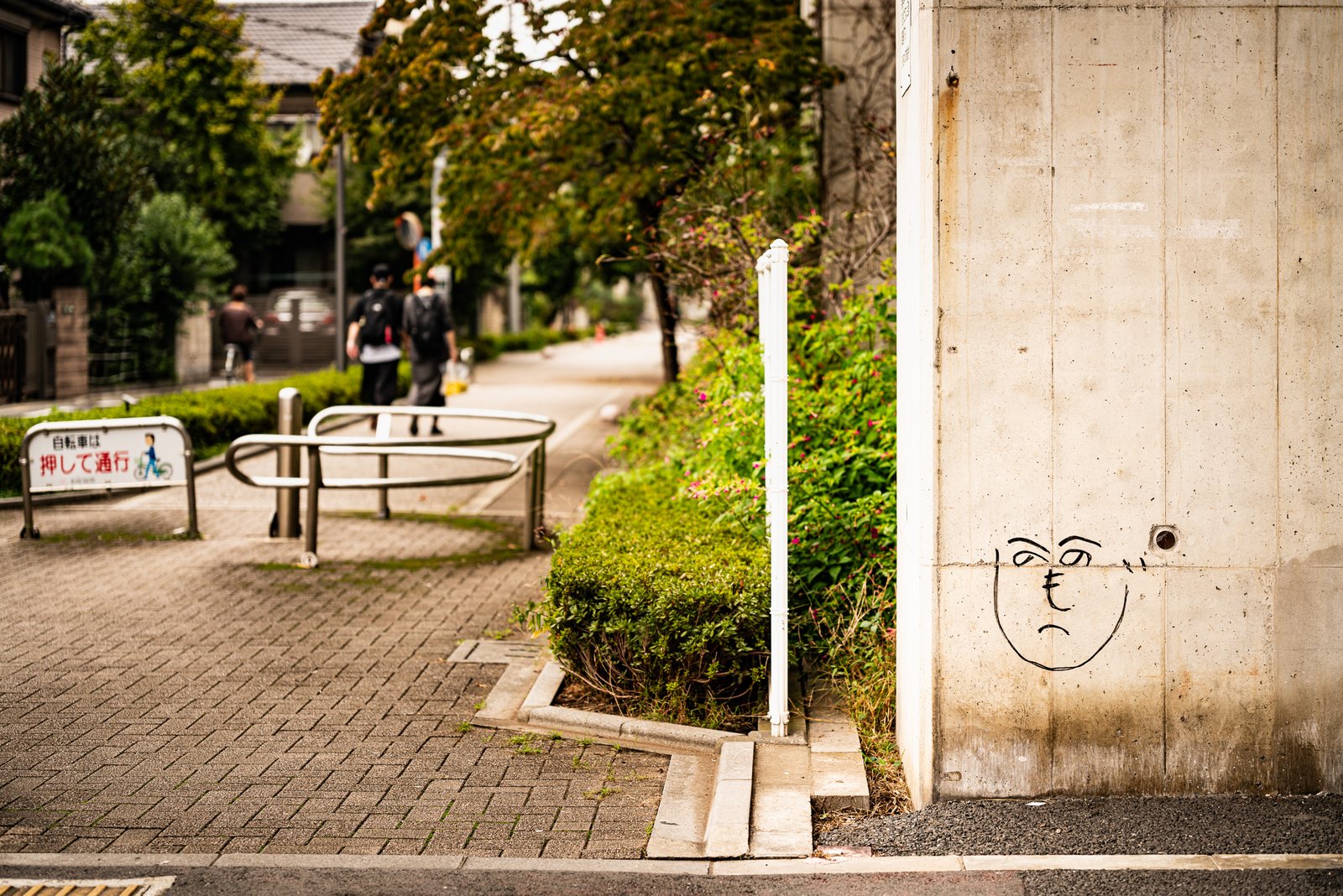
He-no-he-no-mo-he-ji is a traditional doodle, basically, a face constructed out of hiragana.
The hiragana involved1:
- へ = he
- の = no
- も = mo
- じ = ji
These are written in such a way as to make a face:
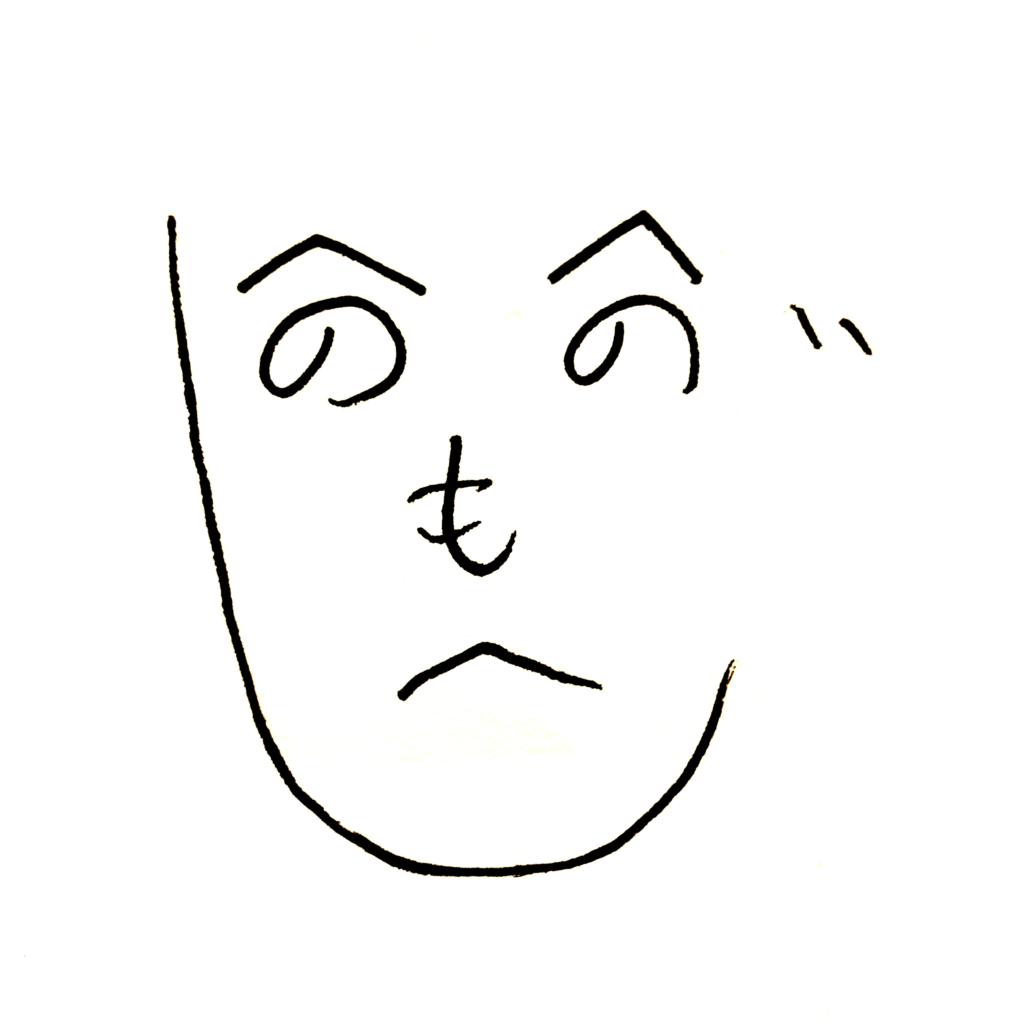
When I was teaching kids, I’d sometimes see it doodled in notebooks or written on the board. Not often, though. It’s old-fashioned, after all, dating back to the middle of the Edo Period (1603-1868). These days, when I encounter it in the wild, it’s usually in the form of graffiti.
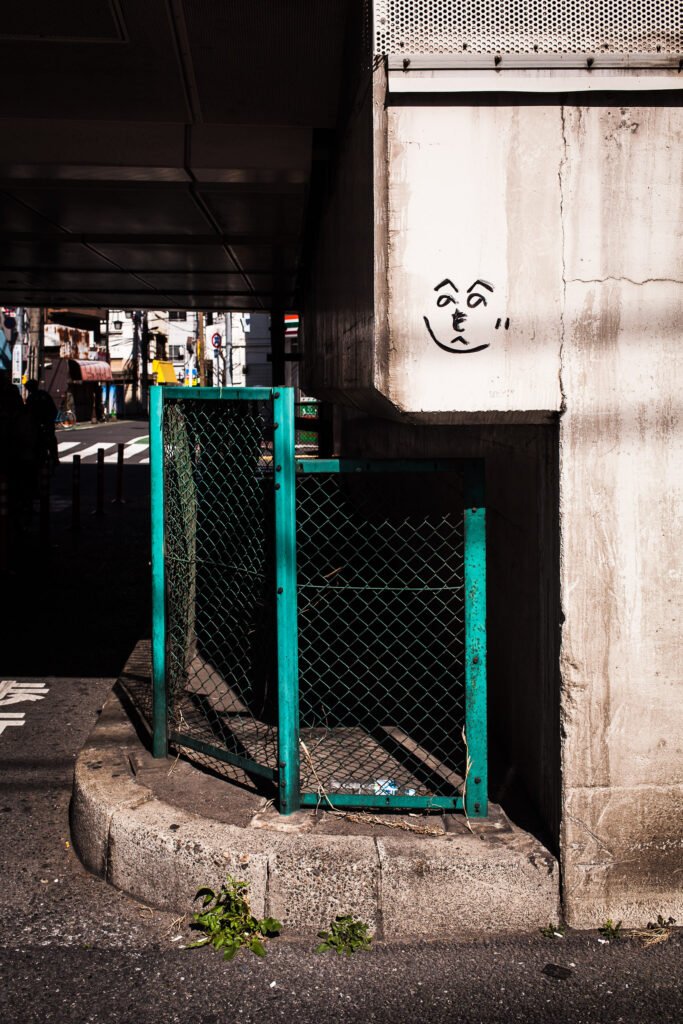
It’s not super common to see, but if you keep a look out, there’s a decent chance you’ll find one somewhere.
- If you’re an English speaker or have an understanding of English pronunciation, all but the first one are basically pronounced as they look. へ/he is not pronounced like in ,”He did it,” but rather like “Hay is for horses.” ↩︎